
Path of Idle Classes: All 6 Roles & Best Starting Choice
Compare all six Path of Idle Godsworn classes by frontline, damage, and support role, then choose a character without relying on an outdated tier list.
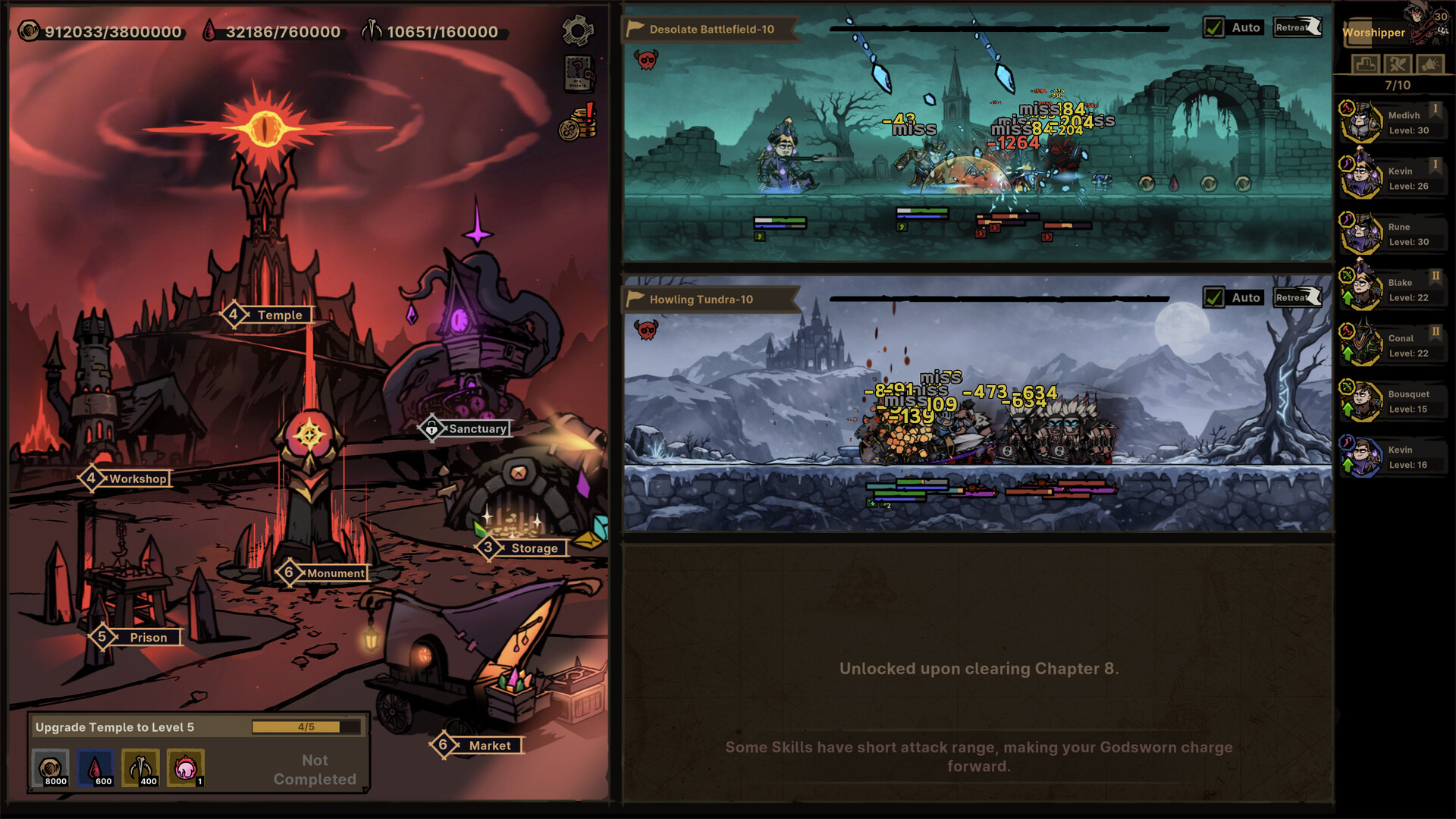
Classes should be evaluated by the job they perform for a combat line, not by a permanent launch-week tier list.
Credit: Official Path of Idle Steam store screenshot ↗
Version note: The image demonstrates combat roles, not current class coefficients.
Quick Answer
- ✓Six classes exist with distinct skill systems; demo-era tier lists are unreliable after launch patches.
- ✓Start with a role—survival, damage, or utility—rather than a fixed class ranking.
- ✓Inspect the in-game tooltip for current skill coefficients; patch notes have repeatedly changed values.
How Many Classes Are in the Full Release?
The official Steam page advertises six unique classes, each with its own skill system. Public full-release sources identify them as Warrior, Hunter (sometimes called Archer), Mage, Priest, Cleric, and Mercenary. Steam players report Mercenary in both frontline and Ballista-oriented team slots, but current public evidence is not strong enough for one universal Mercenary tier or skill list. Because launch patches have changed individual skills, any pre-launch ranking should be treated as time-bound. Use the Builds center for class-specific setups and the Best Team guide when the real question is role coverage across a line.
Continue with: browse class-specific Path of Idle buildscompare tested team compositions
Characters, Prisoners, and Godsworn: The Naming Difference
Players searching for Path of Idle characters are usually looking for the six playable class identities and the Godsworn they recruit for combat lines. The official store describes exiled criminals being transformed with the Old God's blood into Godsworn, while the class choice defines the character's skill system. Patch 1.0.12 added some female Prisoner appearances but did not announce a seventh class. This page therefore organizes characters by the six evidenced classes and their team jobs; it does not publish an invented named-character roster, fixed rarity ranking, or complete skill database.
Warrior: Frontline and Survival
Warrior skills and base attributes lean toward durability and melee engagement. In the demo and early full-release footage, Warriors occupied the front of combat lines, absorbing enemy pressure while other characters dealt damage or provided support. Equipment with high defense, health, and block-related affixes supports this role. Because patch 1.0.8 added combat auto configuration, a Warrior can now be set to trigger defensive actions without constant manual input. Do not assume Warrior damage is low: some builds use offensive affixes and skills to turn a frontline character into a hybrid threat. Test on the same stage after each gear or skill change.
Hunter / Archer: Ranged Damage and Positioning
Hunter or Archer characters operate at range, which can reduce the incoming damage they receive compared to a melee frontliner. Community discussion references skills such as Cloudpiercer and Wild Frenzy, and patch 1.0.8 specifically fixed Cloudpiercer causing Wild Frenzy to cost Health—an interaction that previously made some Hunter setups appear fragile. Ranged damage dealers benefit from weapon requirements, critical or attack-speed affixes, and positioning that keeps them out of enemy focus. Evaluate a Hunter by clear consistency and survival together, not by peak damage in a single attempt.
Mage: Spells, Control, and Area Effects
Mage skills include spell-based damage, crowd control, and area effects that can change how enemies group or attack. Because spell coefficients and resource costs have changed during launch patches, check the current tooltip rather than relying on an old video. Mages can fill a pure damage role, a control role that interrupts enemy actions, or a hybrid depending on equipped skills, Talents, and Runewords. A Mage with a defensive Runeword or shielding support may survive longer than a glass-cannon setup, so compare full-line results rather than individual character score.
Priest and Cleric: Healing, Shielding, and Support
Priest and Cleric skills are referenced in full-release notes as sources of healing, shielding, and other support effects. Patch 1.0.10 specifically adds Sword support to the Cleric basic skills Blessed Strike and Lightning Judgment. That is a verified weapon-compatibility change, not proof that Sword is always the best Cleric weapon. These roles become more valuable as the account spreads across multiple combat lines; evaluate them by first death, clear time and failure rate rather than personal damage alone.
Source: Official version 1.0.10 notes ↗
Why a Fixed 'Best Class' Does Not Exist
No universal best class has enough stable evidence to be presented as permanent. Enemy composition changes by stage, available recruits vary by Prison refresh, equipment drops are random, Talent and Baptism results differ, and launch patches have repeatedly adjusted skill coefficients. A class that was dominant in the demo may be average after a balance change, while a previously overlooked skill may become build-defining. The safer method is: choose a role the current roster lacks, recruit a character that fills it, equip and skill them for that job, and compare results on a fixed test stage. Record over several attempts, not one lucky run.
How to Choose Your First Class
If you are starting with only one or two characters, prioritize survival over peak damage. A frontline that dies early produces zero damage for the rest of the fight. Warrior is a forgiving first choice because its base durability gives room to learn positioning and timing. Hunter or Mage can work as a first character if you pair them with a summon, shield, or control option that keeps enemies away. Avoid judging a first character by how fast it clears easy stages; instead, note where it first fails and whether a missing role caused the failure.
Skill Slots, Talents, and Build Sources
Each character has skill slots above the Talent grid that can receive skills from multiple sources: class skills, Runeword-granted skills, Baptism results, Inspire Masteries, and Mutated Skills. Patch 1.0.8 added real-time Talent UI updates when Mutated Skills change, making it easier to confirm whether a source actually modified the build. An empty slot is not proof of a broken character; inspect all build sources before replacing a recruit. Preferred Skills in the Codex, set before Baptism, increase the chance of rolling a skill that matches the intended role.
Multi-Line Rosters and Role Coverage
As Journey and Exploration expand, you will eventually field multiple combat lines. Spread roles across lines rather than stacking every premium item on one showcase team. A line with no survival will stall even with high damage; a line with no damage will survive forever but never clear. The most efficient account progress comes from having every active line stable enough to gather resources while one line pushes for the next unlock. This portfolio approach is more resilient to patch changes than a single optimized team.
Testing a New Class or Build
Use a repeatable test: pick one stage, record success rate, first death, clear time, and resource cost over at least three attempts. Change only one variable—class, skill, equipment piece, or Talent setup—then retest. This isolates the effect of the change from stage RNG. Do not compare a new class on an easy stage with an old class on a hard stage; use the same encounter for both. Keep notes with version numbers so a future patch does not invalidate your conclusions.
Related Guides
Evidence Sources
- Official Steam store — class description ↗
- Official update feed ↗
- Official version 1.0.12 announcement ↗
- SteamDB app history and metadata ↗
- Steam discussion: beginner team and skill-slot questions ↗
Revision note: checked against the sources above on 2026-09-09. Recheck in-game tooltips after every balance update.